
AvisoNet product deep dive
AvisoNet: Smarter CCTV, Face Recognition, and Incident Response
A desktop security platform for live camera monitoring, face recognition, offline video analysis, alerts, and controlled admin/client licensing.
11 min read
What AvisoNet does
AvisoNet is a desktop security platform built to help stores, forecourts, and operational teams turn existing camera infrastructure into a more proactive monitoring system. It combines live monitoring, face recognition, offline video review, alerting, and licensed desktop deployment.

Built for existing camera setups
The platform is designed to sit on top of existing camera estates. Users can connect local cameras, RTSP/IP streams, and offline recordings without replacing their full infrastructure. That makes the product practical for teams that already have CCTV but need a smarter workflow.
Live camera monitoring
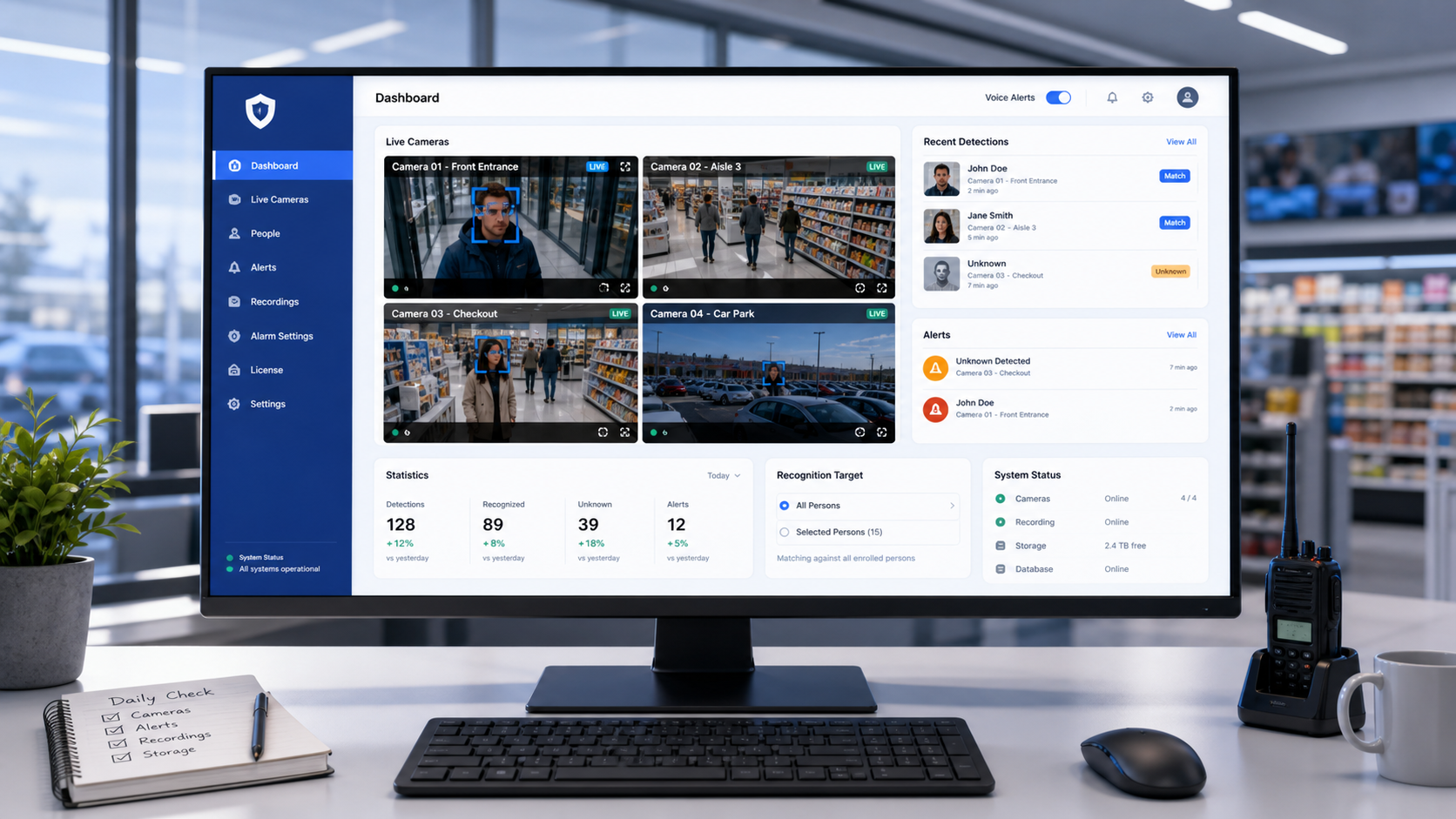
The dashboard acts as the command center. Users can connect cameras, start and stop recognition, view stream status, monitor real-time detections, review quick statistics, and control which recognition targets should be matched.
Flexible camera source management
Camera onboarding supports RTSP sources, local webcams, saved sources, validation before saving, stream removal, and reconnection after interruptions. Validating RTSP streams before storage helps prevent broken camera entries from polluting the workspace.
Face database and person management
AvisoNet includes a full person-management workflow. Users can add a person with a portrait, upload a group image, extract multiple faces, review detected faces, rename individuals, reject unwanted detections, and delete stored people when needed.
Recognition target control
Recognition can run against all stored people or selected people only. That lets teams focus on a shortlist of persons of interest, narrow the scope for a particular operating period, and reduce unnecessary noise during live monitoring.
Offline video detection
The product is not limited to live feeds. Users can upload recorded video, run offline detection, watch processed preview while analysis runs, move across app tabs without losing the job, and download processed output when complete.
Alerts and notifications
The Alert Center turns passive CCTV review into active response. Users can configure in-app popup alerts, voice announcements, browser or desktop notifications, webhook or alarm adapter integration, trigger mode, confidence threshold, cooldown timing, and recent alert history.
Operational controls
Day-to-day usability matters in security environments. AvisoNet includes quick controls for voice announcements, live/offline switching, statistics summaries, alert status, and target selection so operators can work without digging through settings.
License-controlled deployment
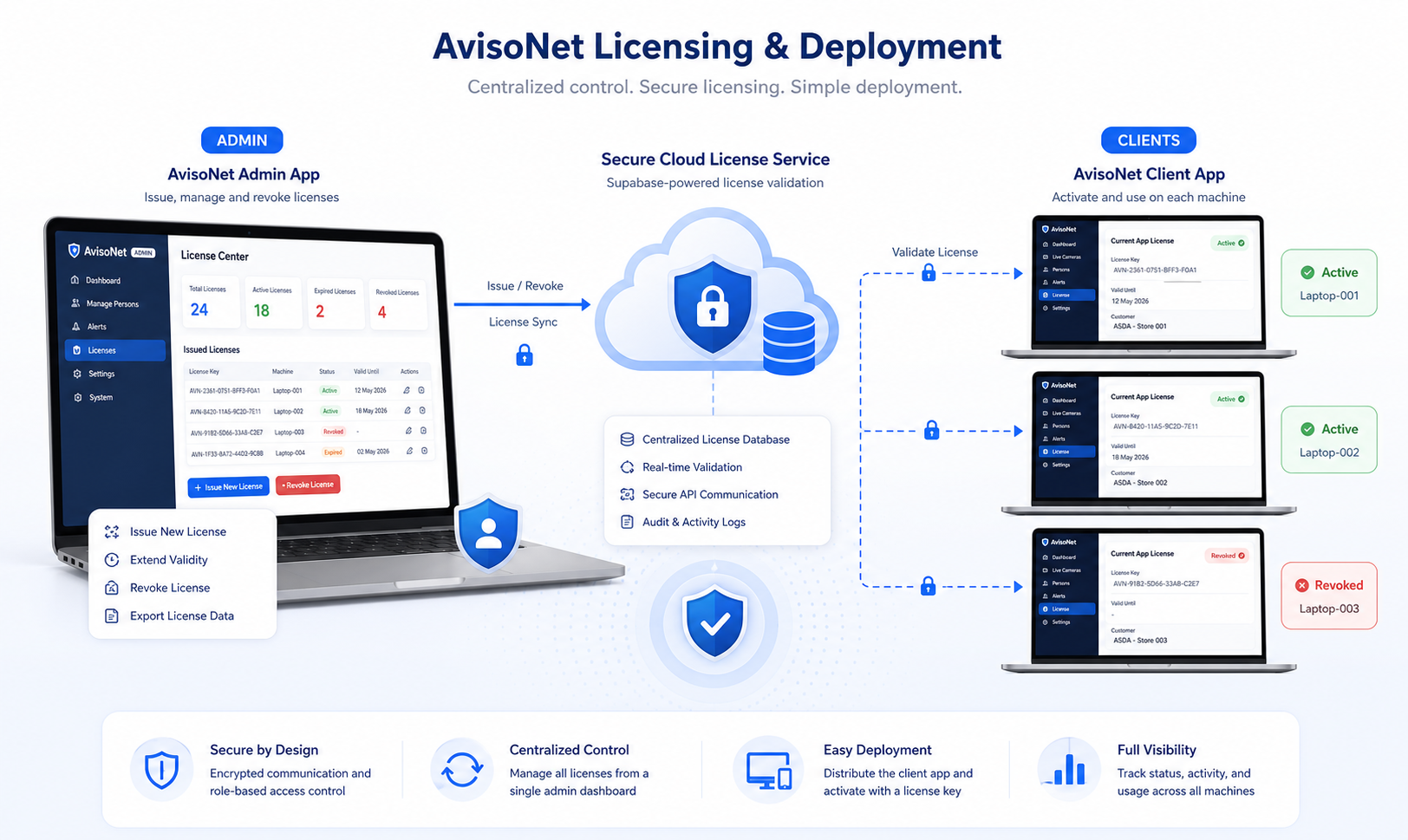
AvisoNet is designed for controlled desktop rollout. The admin app can issue licenses, activate machines, validate license status, extend validity, revoke access, delete old licenses, and manage central licensing through a Supabase-backed service.
Admin and client separation
The admin app is for license management and deployment control, while the client app is for normal operational usage. This keeps sensitive admin functionality out of user builds while still making client activation straightforward.
Why it matters
Traditional CCTV is often reactive: something happens, footage is found later, and someone manually reviews it. AvisoNet is designed to make the same environment more proactive with live recognition, structured person management, offline investigation, real-time alerts, and central deployment control.